
Compression stockings come up in almost every conversation about varicose veins — often as something patients have already tried before booking a consultation. Here’s what they actually do, and don’t do.
What compression stockings do well
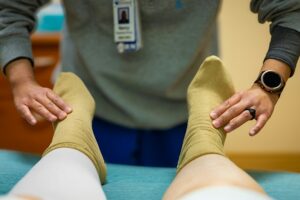
Graduated compression improves circulation by applying pressure that’s tightest at the ankle and gradually loosens up the leg, helping blood move back toward the heart. This reduces swelling, eases aching, and can slow the progression of symptoms.
What they can’t do
Compression stockings manage symptoms — they don’t repair the faulty vein valves causing the problem in the first place. Once a valve has failed, only a medical procedure addresses the vein itself; stockings alone won’t make an existing varicose vein disappear.
When they’re genuinely useful
We often recommend compression stockings before treatment to manage symptoms while you wait for your procedure, after treatment to support healing, or on their own for patients with mild symptoms who aren’t ready for a procedure. They’re also useful for long flights, pregnancy, or jobs that involve a lot of standing.
If you’ve been wearing compression stockings for months without real improvement, that’s usually a sign it’s time for an ultrasound to see what’s actually happening beneath the surface.