Medically reviewed by Dr. Alexander Matz, MD, FRCSC, FACS, founder of Canada Vein Clinics.
Yes, men get varicose veins too, and the signs, causes and treatments are much the same as they are for women. Varicose veins are often thought of as a women’s concern, but men develop them as well, and they deserve the same attention.
What varicose veins are
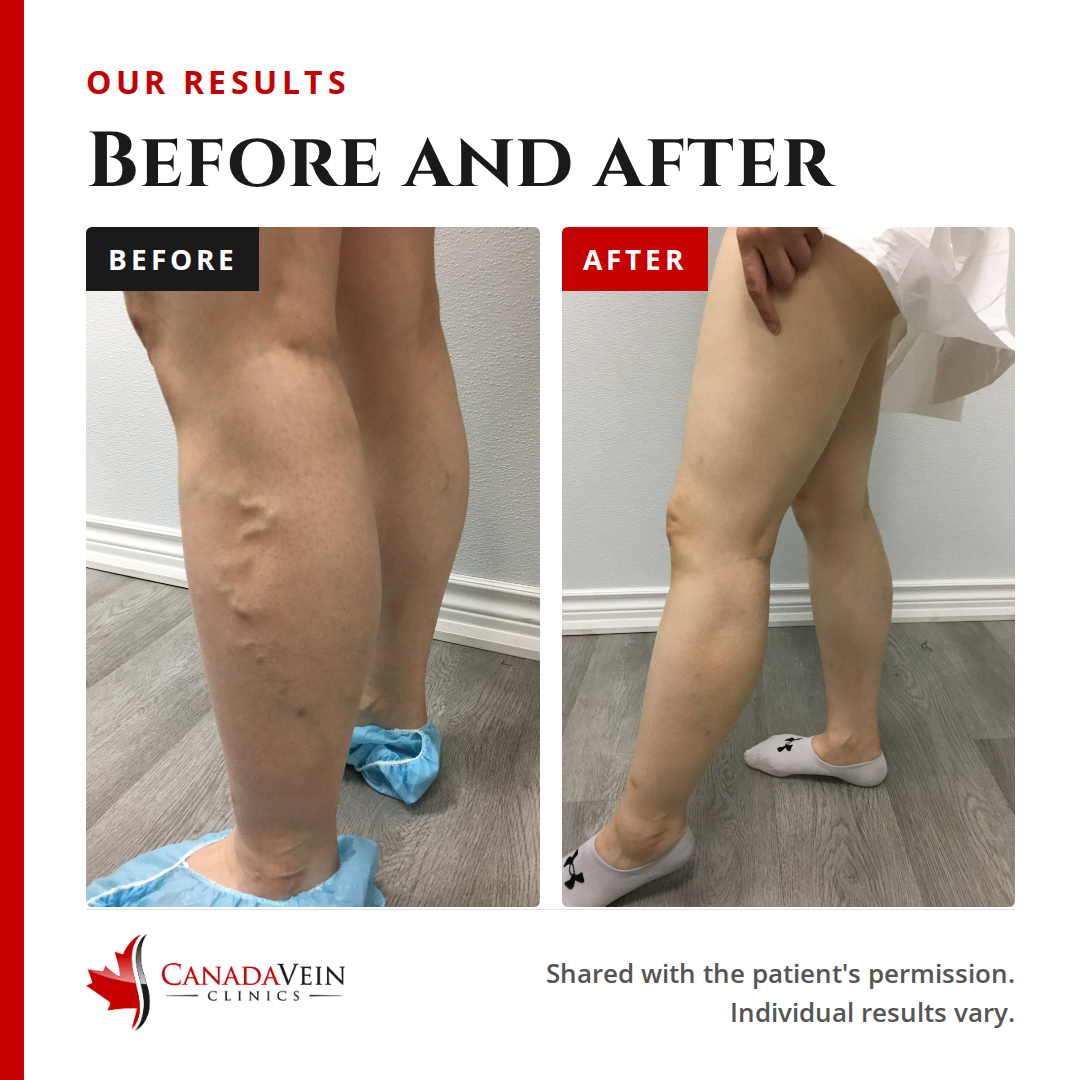
Leg veins have one-way valves that keep blood moving up toward the heart. When those valves weaken, blood can flow backward and pool in the leg, which is called reflux. Over time the veins stretch and become the twisted, bulging veins you can see under the skin.
Signs men often overlook
- Aching or heaviness in the legs, often worse at the end of the day
- Swelling around the ankles
- Cramping or restless legs at night
- Itching or skin changes near the ankle
- Visible bulging or twisted veins
Many men put these down to a long shift or simply getting older. Signs can appear in one leg or both. They are worth mentioning to your family doctor or nurse practitioner.
Why men often wait
Some men assume varicose veins are only cosmetic, or that treatment means a hospital operation and weeks off work. Vein stripping in a hospital was once the main option. That has changed. Today, treatment is done in clinic under local anaesthetic, and patients walk out the same day.
Varicose veins are also not just a cosmetic issue. For many people they are a sign of venous insufficiency, a circulation problem that tends to get worse over time.
Waiting is understandable, but it also means living longer with heavy, aching legs. An assessment simply tells you what is going on, and you decide what to do next.
What can raise the chance of varicose veins
- A family history of varicose veins
- Jobs with long hours on your feet, such as the trades, retail or factory work
- Long periods of sitting, such as driving for work
- Getting older
- Extra body weight
How an assessment works
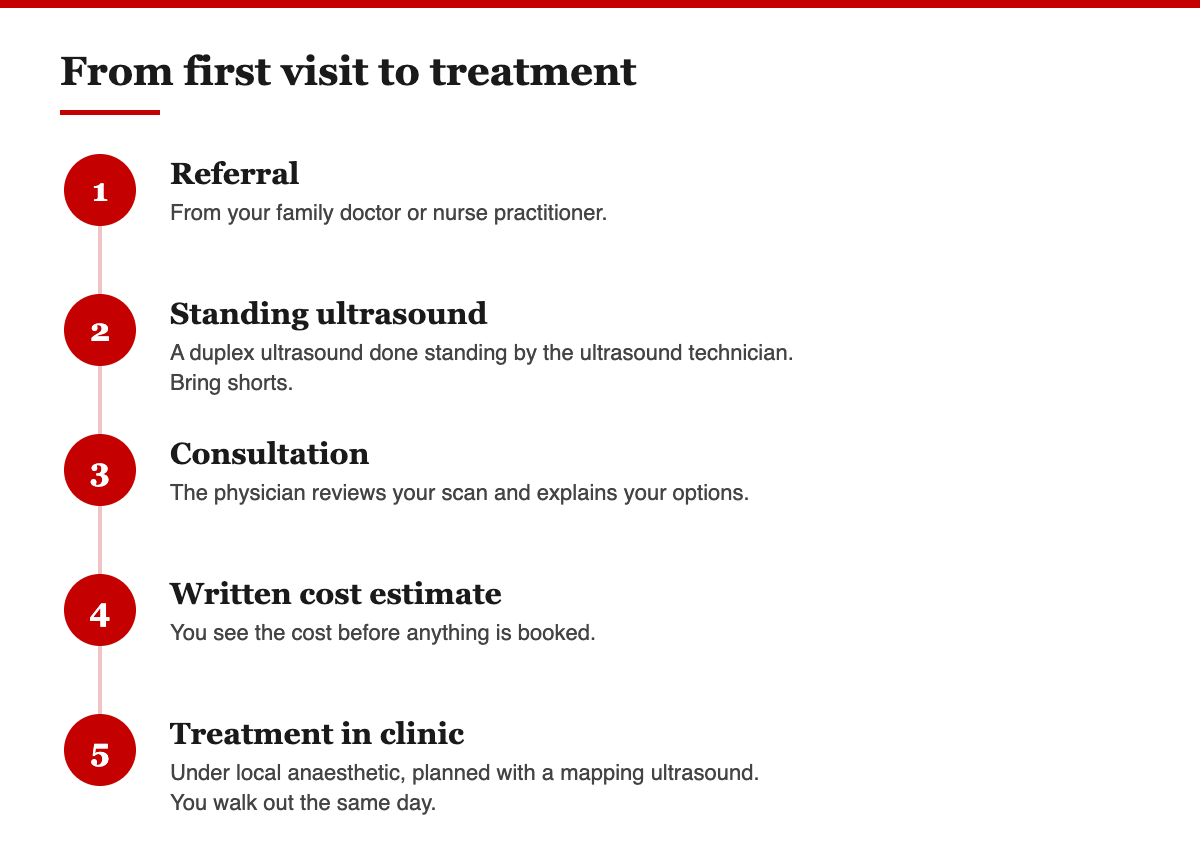
Your visit starts with a referral from your family doctor or nurse practitioner. Next comes a duplex ultrasound, done while you stand by our ultrasound technician, before you meet the physician. Please bring shorts. The physician then reviews your scan with you and explains your options. If treatment is recommended, you receive a written cost estimate before anything is booked.
Treatment options
We offer VenaSeal, which uses a medical adhesive and no heat and is the treatment we perform most often; endovenous laser ablation (EVLA), also called EVLT; ClariVein; and sclerotherapy, including VeinLite-guided sclerotherapy. On treatment day, the vein is mapped again with a mapping ultrasound to plan the treatment. Your physician recommends the option that fits what your ultrasound shows. Because treatment is done in clinic and you walk out the same day, it can be easier to fit around work and family than you might expect.
Our founder, Dr. Alexander Matz, MD, FRCSC, FACS, is a general surgeon with more than 20 years in vein care. He was among the first in Canada, and the first in Atlantic Canada, to perform endovenous laser ablation.
What is covered
In Ontario, your ultrasound and consultation are covered by OHIP with a referral. In Nova Scotia, the consultation is covered by MSI with a referral, and in New Brunswick the consultation is currently covered by Medicare with a referral; in both provinces the ultrasound and treatment are paid. Treatment is paid in every province, and many patients use a Health Spending Account toward the cost.
Your next step
If you have noticed any of these signs, ask your family doctor or nurse practitioner for a referral to Canada Vein Clinics, or call us at 1-888-876-8346. We have 15 clinics across Ontario, Nova Scotia and New Brunswick; find the one nearest you.