
Plenty of people live with mild varicose veins for years without complications. But there’s a difference between veins that are simply visible and veins that are telling you something’s wrong. Here are five signs it’s time to book a consultation rather than wait it out.
1. Skin discoloration near the ankle
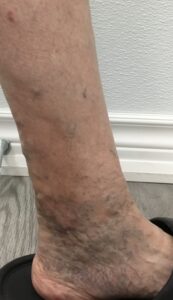
A brownish or reddish discoloration around the ankle is often a sign of long-standing venous pressure affecting circulation in the skin itself, not just the vein. Left unaddressed, this kind of skin change can progress toward ulceration.
2. Aching or heaviness that doesn’t ease with rest
Some end-of-day heaviness after a long shift on your feet is common. It’s a different signal when the ache persists even after elevating your legs or resting overnight — that pattern points toward venous insufficiency rather than ordinary fatigue.
3. Swelling that doesn’t go down by morning
Ankle or lower-leg swelling that resolves overnight is a normal daily fluctuation. Swelling that’s still present when you wake up suggests your veins aren’t managing blood flow the way they should.
4. A vein that’s suddenly hard, red, warm, or tender
This combination can indicate superficial vein thrombosis — a clot within the vein itself. It’s not usually an emergency, but it does warrant prompt evaluation rather than a wait-and-see approach.
5. Skin breakdown or a sore near the ankle that won’t heal
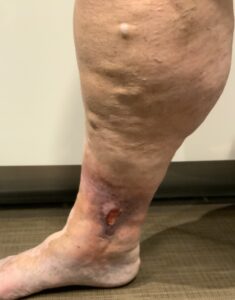
A venous ulcer — a slow-healing open sore, typically near the ankle — is a sign that venous insufficiency has progressed significantly. This is the clearest signal that treatment shouldn’t be delayed further.
If any of these sound familiar, the next step is a consultation with a diagnostic ultrasound, which tells us exactly which veins are involved and how best to treat them.