Medically reviewed by Dr. Alexander Matz, MD, FRCSC, FACS, founder of Canada Vein Clinics.
Night leg cramps can be one of the symptoms of varicose veins and venous insufficiency, although cramps have other causes too. If cramps often wake you, especially alongside heavy, aching or swollen legs, it is worth asking whether your veins are part of the picture.
How veins and cramps can be linked
Leg veins have one-way valves that keep blood moving up toward the heart. When those valves weaken, blood flows backward and pools in the lower leg, which is called reflux. Through the day, gravity adds to that pooling, so vein symptoms often build as the hours go on. For some people, that shows up in the evening or at night as aching, restlessness or cramping in the calves. Long days of standing or sitting can add to it.
Cramps have many causes
Night cramps are common and are not always related to veins. Other health conditions and some medications can play a role, and your family doctor or nurse practitioner is the right person to look at the whole picture. Mention new or worsening cramps at your next appointment rather than waiting. A vein assessment helps answer one specific question: are leaking veins contributing to your symptoms?
Signs that point toward your veins
Cramps are more likely to be worth a vein assessment when they come with other signs of vein disease.
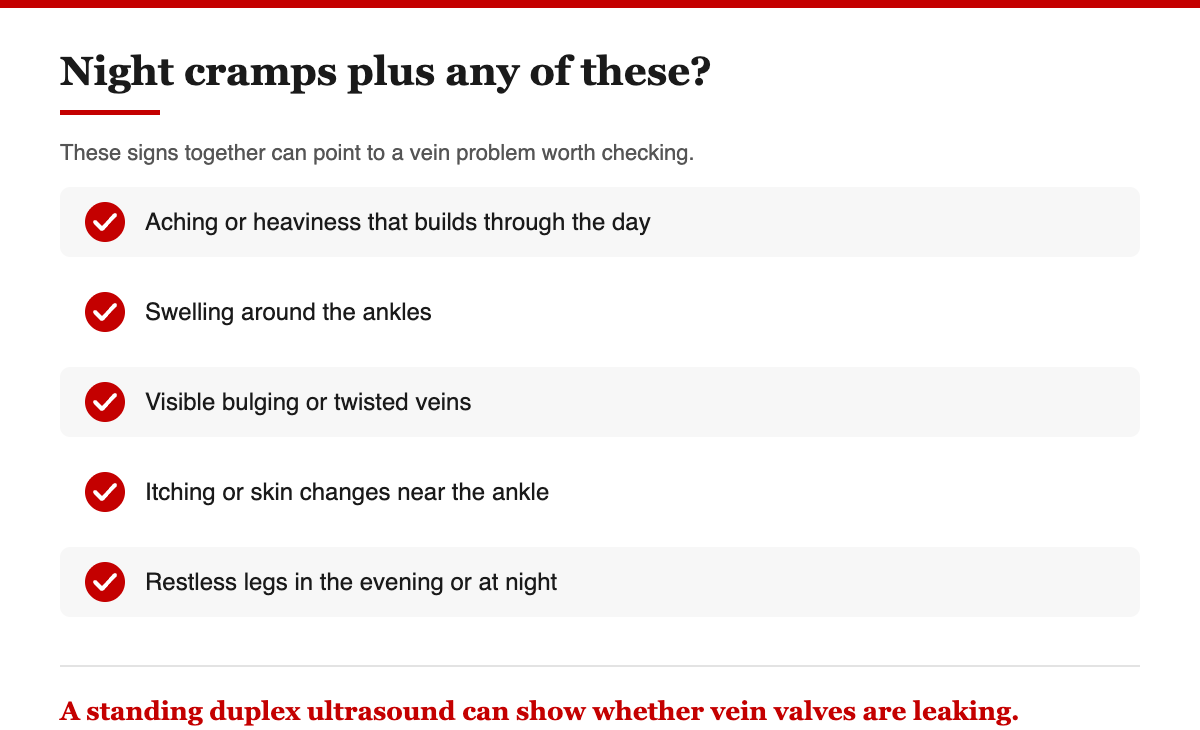
- Aching or heaviness that builds through the day
- Swelling around the ankles
- Visible bulging or twisted veins
- Itching or skin changes near the ankle
- Restless legs in the evening or at night
Some people have leaking veins without large visible varicose veins, so the absence of bulging veins does not rule out a vein problem.
How we find out
With a referral from your family doctor or nurse practitioner, your first visit is a duplex ultrasound, done while you stand by our ultrasound technician. Standing lets gravity show how your valves really work. Please bring shorts. The scan comes before your consultation, so the physician can review the results with you and explain what they mean.
Keeping track before your appointment
It can help to note when your cramps happen, how often they come, and whether they follow long days on your feet or long periods of sitting. Notes like these give your family doctor or nurse practitioner, and later our physician, a clearer picture of your symptoms.
If treatment is recommended, you receive a written cost estimate before anything is booked.
What treatment involves
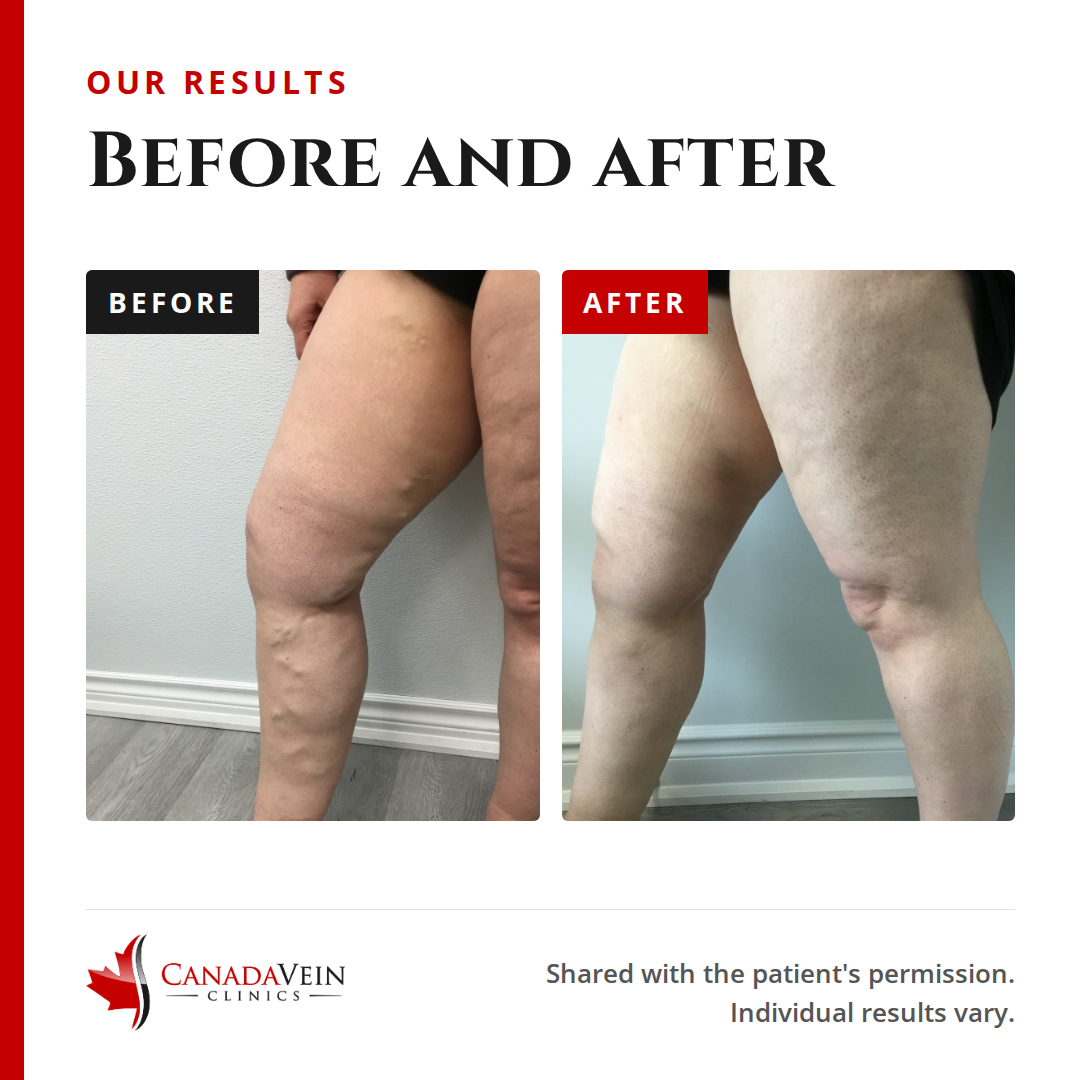
If leaking veins are found, treatment closes the faulty vein so blood flows through healthy veins instead. Options at Canada Vein Clinics include VenaSeal, which uses a medical adhesive and no heat and is the treatment we perform most often, endovenous laser ablation (EVLA), ClariVein and sclerotherapy, including VeinLite-guided sclerotherapy. All are done in clinic under local anaesthetic, and you walk out the same day. On treatment day, the vein is mapped again with a mapping ultrasound to plan the treatment.
What is covered
In Ontario, the ultrasound and consultation are covered by OHIP with a referral. In Nova Scotia, the consultation is covered by MSI with a referral, and in New Brunswick the consultation is currently covered by Medicare with a referral; the ultrasound is paid in both provinces. Treatment is paid in every province, and a Health Spending Account can be used toward the cost. Read more in our coverage guide.
Your next step
If night cramps keep coming back, start with your family doctor or nurse practitioner and ask whether a referral to Canada Vein Clinics makes sense for you. You can also call us at 1-888-876-8346 with questions. We have 15 clinics across Ontario, Nova Scotia and New Brunswick.