Endovenous laser ablation (EVLA) closes a leaking leg vein from the inside using laser energy, through a single small entry point and under local anaesthetic. It treats the cause of most varicose veins, and you walk out of the clinic the same day. EVLA is the same procedure some clinics call EVLT (endovenous laser treatment).
Why varicose veins happen
Leg veins have small one-way valves that keep blood moving up toward the heart. When the valves in a main surface vein, usually the great or small saphenous vein, stop closing properly, blood flows backward and pools. The pressure stretches the smaller veins near the skin into bulging varicose veins and can cause aching, heaviness, swelling and night cramps.
How EVLA works
Before your consultation, our ultrasound technician performs a diagnostic duplex ultrasound while you stand, because reflux in the leg veins shows best upright. If EVLA is the right treatment for you, the procedure then goes like this:
- Mapping ultrasound. On treatment day, the vein is mapped again with ultrasound to plan the entry point and the path of the laser fibre.
- Numbing. The skin is numbed with local anaesthetic and a thin catheter is placed into the vein through a needle-sized entry point.
- Protective fluid. Numbing fluid is placed around the vein along its length to protect the surrounding tissue from heat.
- Laser. A laser fibre is drawn back through the vein, sealing it closed.
- Home the same day. A small dressing goes on and you walk out of the clinic.
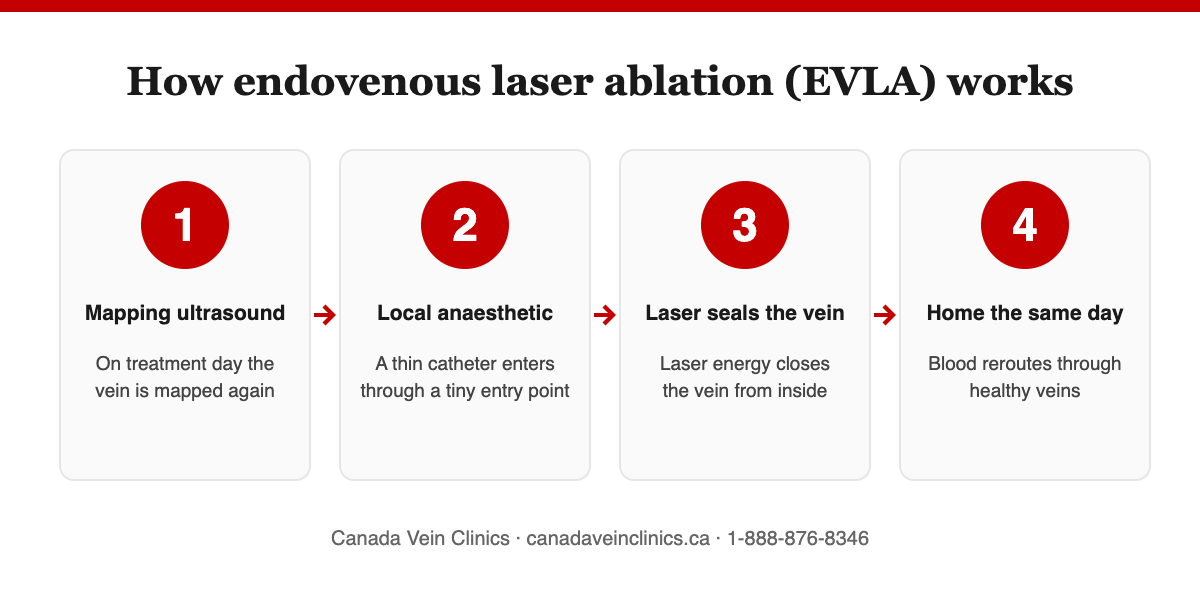
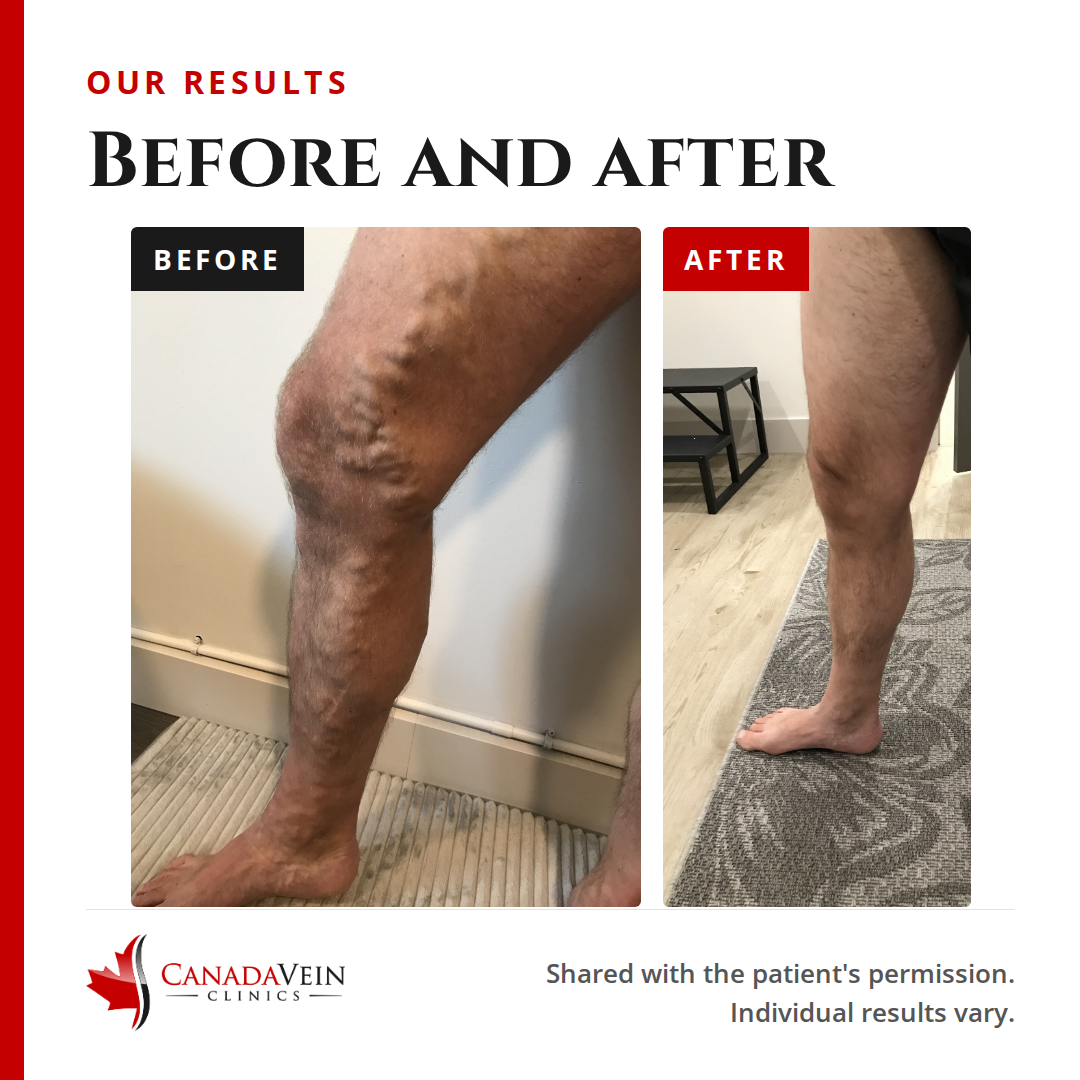
Once the faulty vein is closed, blood reroutes through healthy veins and the visible varicose veins usually settle over the following weeks. Some patients also have sclerotherapy for remaining smaller veins.
What recovery is like
Most patients return to their usual daily activities quickly. Tightness, tenderness or bruising along the treated vein is common and settles over a few days to weeks. Your physician will give you instructions for the days after and when to return to strenuous exercise, and a follow-up ultrasound checks the result.
EVLA or VenaSeal?
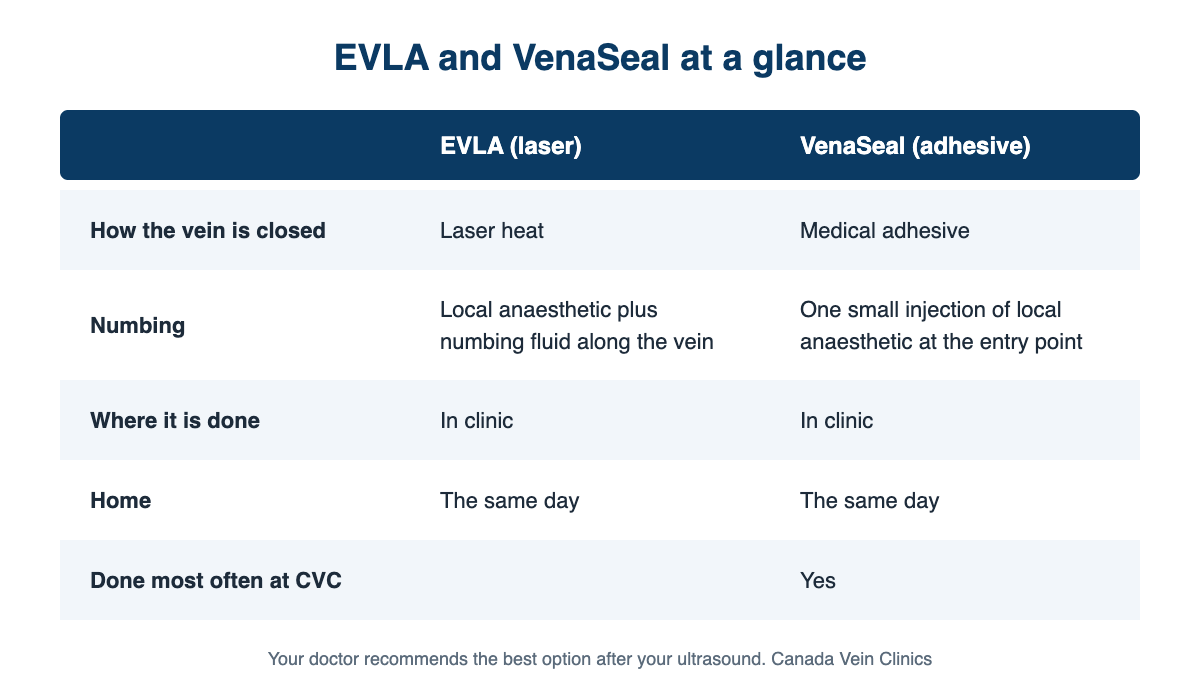
Both close the faulty vein in clinic under local anaesthetic. EVLA uses heat, so it needs numbing fluid along the vein. VenaSeal uses a medical adhesive instead of heat and needs only one small numbing injection. Which is better for you depends on the size and path of your vein, which your ultrasound shows. VenaSeal is the treatment we perform most often; EVLA remains an excellent, well-established option.
Is EVLA covered?
In Ontario, the ultrasound and consultation are covered by OHIP with a referral from your doctor. The EVLA treatment itself is not covered by OHIP; many patients use a Health Spending Account. You receive a written estimate before anything is booked. Coverage differs in Nova Scotia and New Brunswick; see our coverage guide.
Where to have EVLA
Canada Vein Clinics has 15 clinics across Ontario, Nova Scotia and New Brunswick, founded by general surgeon Dr. Alexander Matz, among the first in Canada, and the first in Atlantic Canada, to perform endovenous laser ablation. In the Greater Toronto Area, see vein ablation in the GTA for clinic addresses. Ask your family doctor for a referral, or call 1-888-876-8346.